The technology
Light does the work.
Nothing else touches it.
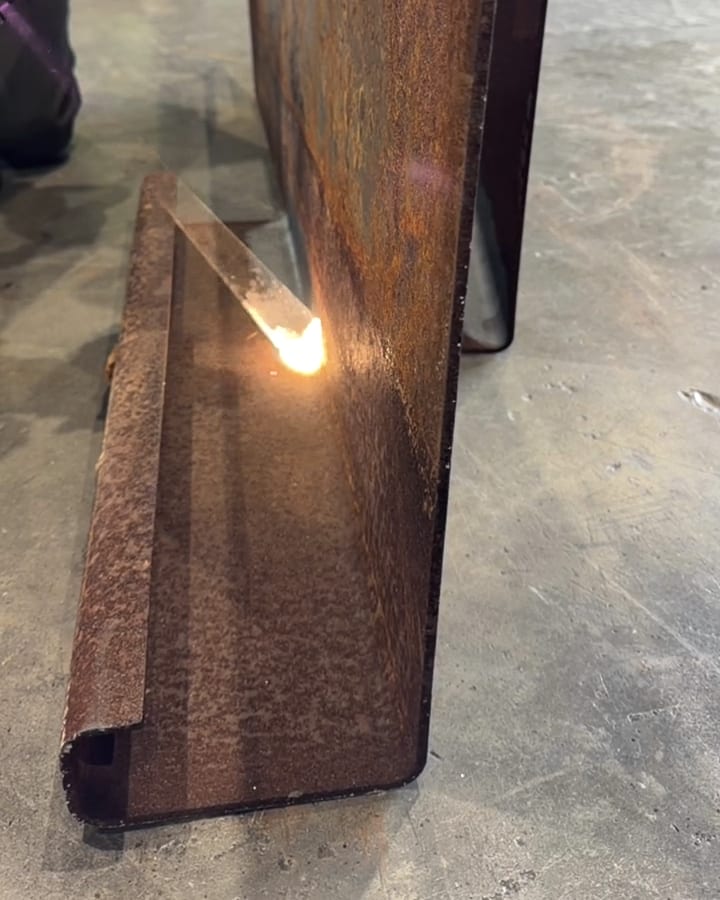
Laser cleaning is an established, risk-conscious method for surface restoration and preparation — on metal, stone, masonry, wood and more. The beam is programmed to remove what is on the surface and leave the surface itself alone.
1064–1080 nm fiber laser Pulse & continuous ≤6000 W Non-contact ANSI Z136


Ablation, not abrasion
Removes the contaminants.
Preserves the surface.
Rust, paint, coatings, grease and grime are the layer sitting on top. They absorb the beam, flash to vapor, and lift off. The method is the same on every job: the beam is programmed to the contaminant coming off and to the material underneath, so it clears what's on top and leaves the surface intact. What changes from job to job is how much room sits between those two settings — widest on metal, which reflects much of the beam and carries the heat away; narrower on stone, masonry and wood, which take up more of it. That is what the parameters are set for, and why they are set before the job runs rather than during it.
That window is the whole method. The beam is not grinding the contamination away; it is putting energy only where the contamination can accept it. Past what the layer needs, more power buys speed, not a cleaner result — so the systems are calibrated to the material rather than run flat out.
- Coating / paintabsorbs — removed
- Rust / grime / stainabsorbs — removed
- The surfacepreserved — intact
The layer stack
What the beam meets.
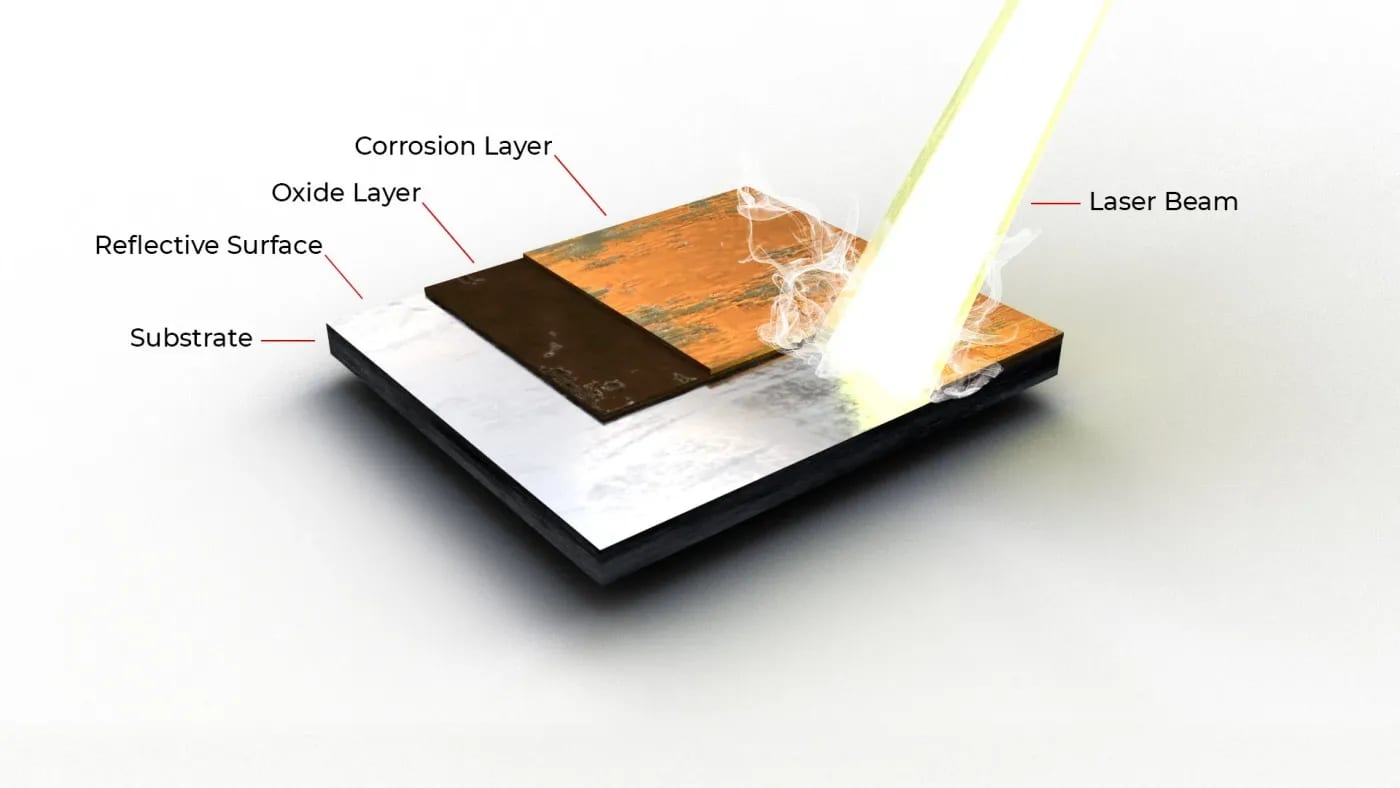
Contamination sits in layers. On corroded metal that's a corrosion layer over an oxide layer over the sound surface beneath, and the beam works down through it in order, stopping at the metal. The same programming holds on stone, masonry and wood — the soiling, paint or coating lifts and the material is left alone — over a narrower window, which is why the parameters are matched to the material before any beam is fired.
Compared with conventional methods
Four fewer ways
for a job to go wrong.
And it runs faster — shorter timelines, less labor, and less time spent in the work zone.
-
01 · Liability
Reduced liability exposure
Eliminates the use of hazardous chemicals and abrasive media, minimizing risks related to chemical handling, disposal, and workplace safety incidents.
-
02 · Consistency
Controlled, repeatable process
Precision-calibrated laser systems operate within defined parameters, reducing the probability of substrate damage or inconsistent results.
-
03 · Containment
Minimal residue
Unlike sandblasting or chemical stripping, laser cleaning produces minimal waste — reducing environmental liability and cleanup costs, and reducing containment requirements.
-
04 · Contact
Non-contact operation
No physical abrasives or solvents are applied to the surface, lowering the risk of unintended material degradation.
Approved materials
Material suitability.
Every project is assessed individually so the right parameters and safety protocols are applied before any beam is fired.
Materials
Contaminants